Understanding ADAS Calibration and the Warning Signs of Malfunction
The Importance of ADAS Calibration: How to Spot System Issues Early
Advanced Driver Assistance Systems have become an essential part of modern vehicle safety, helping drivers stay aware of their surroundings and respond more quickly to potential hazards. While these systems often operate quietly in the background, their effectiveness depends on proper calibration and accurate sensor performance. Understanding what ADAS is and recognizing the warning signs of malfunction can help drivers identify when these systems are no longer functioning as intended.
What ADAS Is and How It Supports Modern Driving
Advanced Driver Assistance Systems (ADAS) are a suite of safety technologies that monitor traffic conditions and help reduce the risk of collisions. These systems use cameras, radar, and ultrasonic sensors, along with advanced software, to interpret the vehicle’s environment in real time. Features such as lane departure warning, adaptive cruise control, automatic emergency braking, blind spot monitoring, and forward-collision warning are all part of ADAS. Rather than replacing the driver, these systems are designed to enhance awareness and provide alerts or assistance when potential risks are detected.
Because ADAS relies on precise measurements and continuous communication between sensors and onboard systems, accuracy is critical. Cameras and sensors must be properly calibrated to measure distance, detect lane markings, and recognize surrounding vehicles and obstacles. Even minor shifts in alignment can affect how the system interprets information. As a result, drivers may not always notice when performance begins to change, making it important to understand how these systems function and why proper calibration is necessary for consistent operation.
Why ADAS Calibration Matters
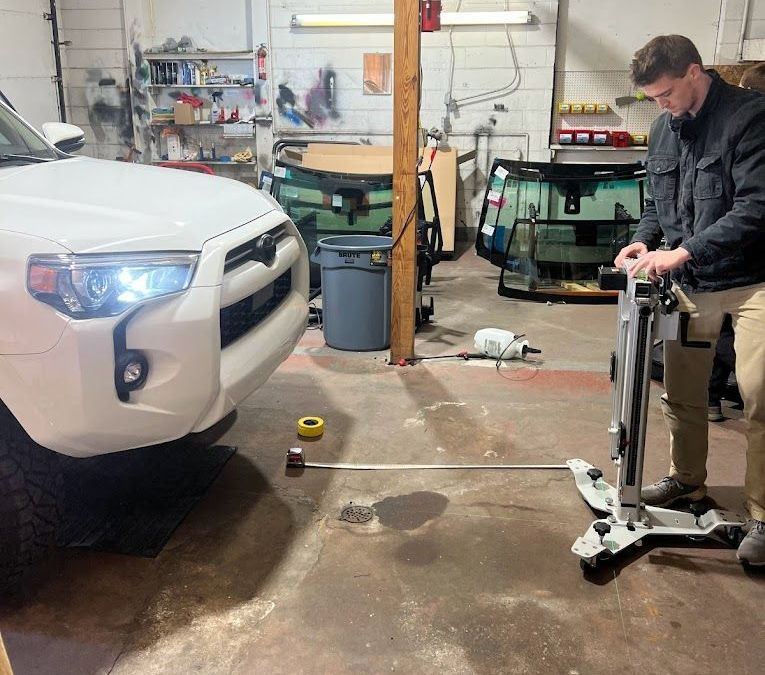
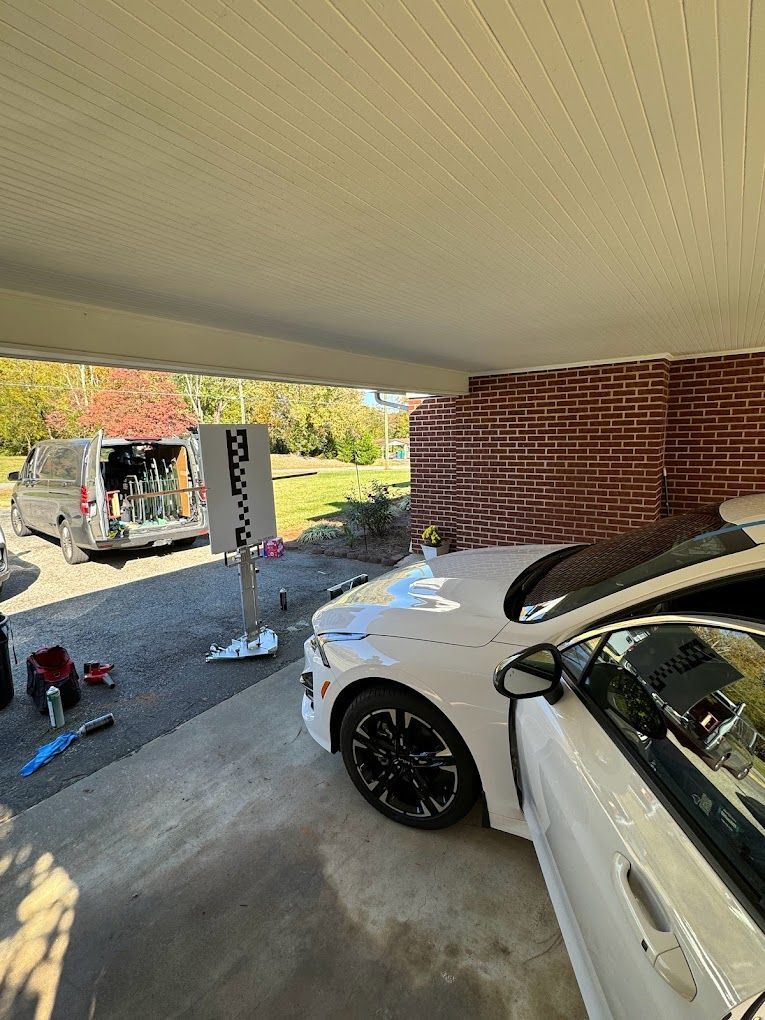
ADAS calibration ensures that the vehicle’s cameras and sensors are aligned according to manufacturer specifications so they can accurately interpret real-world driving conditions. Calibration is commonly required after windshield replacement, collision repair, suspension work, or wheel alignment, as these events can alter sensor positioning or vehicle geometry. Modern safety systems are engineered with extremely tight tolerances, so even small alignment variations can affect how the system measures distance or responds to changing traffic conditions. When calibration is correct, ADAS features operate smoothly and reliably, often without drawing attention to themselves.
When calibration is incorrect or incomplete, systems may continue functioning but produce unreliable or inconsistent results. Drivers may notice unexpected alerts, delayed warnings, or assistance features that behave differently than before. In some cases, the vehicle may temporarily turn off certain safety functions to prevent erroneous operation. Because many drivers rely on ADAS features in daily driving, understanding calibration helps ensure these systems continue to provide reliable support and accurate safety responses.
How to Recognize When ADAS Is Not Functioning Properly
Changes in ADAS performance are not always obvious, particularly when they occur gradually or after routine vehicle service. Drivers may assume unusual alerts or inconsistent behavior are temporary when they may actually signal calibration issues or sensor misalignment. Paying attention to warning messages, unexpected system responses, or noticeable differences in how assistance features operate can help identify problems early. Recognizing these warning signs is important because malfunctioning ADAS can reduce safety performance or cause confusion in critical driving situations.
Warning Signs That ADAS May Not Be Functioning Properly
- Dashboard warning lights related to driver assistance systems remain illuminated or appear intermittently without a clear cause.
- Lane departure warnings activate while the vehicle is centered in the lane, or fail to activate when lane markings are clearly visible.
- Adaptive cruise control can respond unpredictably, including sudden braking, delayed acceleration, or inconsistent following distance.
- Forward-collision warning alerts trigger when no obstacle is present, but fail to activate when approaching slower traffic.
- Blind spot monitoring alerts appear without nearby vehicles or fail to activate when another vehicle is within the detection zone.
- Automatic emergency braking engages unexpectedly or responds later than normal during routine driving conditions.
- Parking assistance or surround-view camera systems display distorted images, incorrect guidelines, or inaccurate proximity alerts.
- Sensors frequently become unavailable during clear weather, accompanied by system-limitation messages.
- ADAS features behave differently following windshield replacement, body repairs, or wheel alignment work, even without visible warning lights.
- Lane-keeping assistance applies abrupt steering corrections or activates later than expected during highway driving.
ADAS technology continues to evolve as manufacturers expand safety capabilities and integrate more advanced driver assistance features into modern vehicles. However, the effectiveness of these systems depends entirely on accurate calibration and reliable sensor performance. When warning signs appear, they should not be ignored, as improperly functioning systems can create a false sense of security or provide inaccurate information. Understanding how ADAS works and recognizing the symptoms of calibration issues helps drivers stay aware of changes in vehicle behavior and ensures that safety systems perform as intended when needed most.
Is Your ADAS Malfunctioning in Mount Airy, NC?
If you discover that your
ADAS in
Mount Airy,
Elkin,
Winston-Salem, or
Pilot Mountain, NC, is malfunctioning,
contact us at Goin Glass. We’re locally owned and operated and have been servicing vehicle owners in the Mount Airy area since 1987, so we have decades of experience calibrating ADAS systems since their inception. Goin Glass is trusted by over 75% of the region’s collision centers and dealerships because we always do the job right the first time. Check out our Google reviews
here!